Emission radio. Live les Dimanches de 20h à 22h sur le 95 fm (RQC- radio locale Mouscron-Kortrijk- Lille Métropole).

En écoute ici en streaming.

Pataugeage dans toutes les mares ! (Rock, Electro, Jazz, Hip-Hop, leurs dérivés connus, inconnus ou oubliés)

Tous les Canards vont à la Mare est une réalisation produite par Animation Média Picardie.

co : touslescanards@gmail.com

dimanche 10 mai 2015

Album de la Semaine : Siskiyou - Nervous

Siskiyou
Nervous


Interview de Siskiyou, par Aaron Morris de Noisy

Noisey: Your band’s third album was just released. Why did you decide to name it Nervous?
Colin Huebert
: There’s a strain that runs through the record that has to do with anxiety, and I suppose overall nervousness. It seemed like a good title. I felt like it threaded the whole thing together.
In 2012 you began to experience intense chronic ear ringing. How did that affect the recording process of the album?
It affected it quite a bit I think. Initially, the idea was to sit down with the band before the songs were completely written, and work it out in rehearsals. But because of the problems I was having with my ears, that didn’t really work. I ended up doing a lot of demo recordings at home and really fleshing out the songs on my own. There was a lot of rehearsals, but they were quieter than what you would normally expect. We recorded it in a very isolated way so that I didn’t have to be sitting in front of a drum set the whole time. I would say it ended up with me writing the songs more than I’d wanted it to be.
How do you go about coping with these problems?
Various ways. Meditating, white noise, sometimes different medications. I wouldn’t say it’s particularly easy. I feel like you end up with a number of different things to cope, and then you use whatever tool you need at the time to get through it.
Which tool do you find the most successful?
Depends on what day you’re talking about. If it’s more like you’re having a lot of anxiety, then maybe some kind of medication. If it’s just the physical sensation then maybe some white noise to help you sleep.
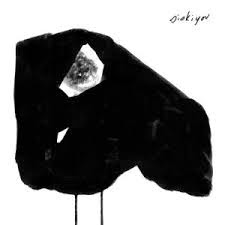
I found the album artwork to be quite intriguing. Where did the idea for it come from? 
An acquaintance of mine, who’s an artist in town, came up with this group of paintings for the record. I commissioned him to respond to the music. He came out with a bunch, and I selected one that I liked.
Why do you think you chose that particular image to be the face of the album?
That one just spoke to me. It had a lot of levels to it, and I feel you could see it in a number of different ways. There was some depth to it.
Owen Pallett provides strings throughout the album. What was working with him like? 
I sent him the tracks, he recorded them on his end, and then sent them back to me. And that was that. We didn’t actually get together in the same room or anything.
Is that how you prefer to do things, or would you rather have someone in the studio with you?
I think ultimately it’s easier if you’re in the same room as the person, because then there’s less back and forth. You can get it done right there and then without having to have someone else record it. You say “change this part, fix that part. This part’s great.” Then they have to re-fix it and send it over, and it’s just a lot more time consuming. It’s easier if you’re in the same room as the person for sure.
What do you look for in a collaborator?
Someone that’s actually a songwriter, as well as a really talented musician. I think it helps to have both of those things in the same person you’re collaborating with.
The opening track on the album is called “Deserter.” Who’s the one doing the deserting?
Maybe me at the time. I felt a little tagged out of life, a little hyper-reclusive.
For “Jesus In The 70s” you shot a Super 8 movie and chose to shoot it in the parking lot of a supermarket. Why that particular location?
I go to this enormous superstore to buy diapers only. They sell them in large quantities and [that way] I don’t have to get diapers so much. I was driving around one dreary day, listening to a rough mix of that song trying to find a parking spot, and I just looked up and realized how much of a cinematic quality driving around took with that music as the backdrop. I thought it would make for a pretty decent, low-budget music video, and so I came back about a year later and shot it with my Super 8 camera.
The sixth song on the album is called “Oval Window.” Could you elaborate on the subject matter of that song?
I went through a period of time where because of my ears I was dizzy for a couple weeks, and I found that pretty hard to deal with. That song speaks a little bit to that unfortunate, uncomfortable time. That dizziness is hard to deal with, because it messes up the way you walk, if you even can walk. I wasn’t sure if that was gonna stop, and that was a frightening composition. That’s where that song emerged from.
Does this dizziness still continue?
No. It kind of just went away, for no reason.
Did you ever discover the cause for it?
No, but I presume it has something to do with everything else that has transpired.
“Violent Motion Pictures” is one of the more cinematic tracks on the album. I was wondering if you could explain the inspiration behind it?
I thought I was losing my mind for awhile. That track goes through that time. Without going into too much detail, it kind of documents what I felt like. I know that this all sounds kind of crazy, the dizziness and then this, but when all this started and I had all these problems that nobody could tell me what was wrong with me, I started to wonder if I was just going crazy. That song somewhat elaborates on that.
Where did you end up finding solace from these issues?
I don’t know if I really have. I’ve learned how to cope and see the bright side of things, but I wouldn’t say that I’ve completely come to an end point of comfort and acceptance. I think I’m still searching through it.

Line Up : Colin Huebert, Erik Arnesen
Label : Constellation Records
Tracklist :
01 – Deserter
02 – Bank Accounts and Dollar Bills (Give Peace a Chance)
03 – Wasted Genius
04 – Violent Motion Pictures
05 – Jesus in the 70’s
06 – Oval Window
07 – Nervous
08 – Imbecile Thoughts
09 – Babylonian Proclivities
10 – Falling Down the Stairs


dimanche 3 mai 2015

Album de la Semaine : Spectres - Dying

Spectres
Dying


Interview de Spectres, par Joe Clay de The Quietus

Most bands head to London to seek their fortune, but you went to Bristol. What made you decide to move there?
Joe Hatt: I was more familiar with London. At that point I'd only been to Bristol a handful of times, but it felt right - maybe because of geography. It was closer [to Barnstaple] so there was less risk. We'd heard so many stories of friends in bands who moved to London to "make it" and it never happened because they're not good enough, but also because it's so dog eat dog. And none of us were all that aspirational. Not then at least. We know people who moved there who can't even practice anymore because they have to work two jobs. So we knew we had to move, and Bristol was just the closest place to us that had a vibrant music scene where we thought we'd be able to fit in.
How did Howling Owl come together?
JH: When we moved to Bristol we were expecting to fall into a scene straight away and meet like-minded bands. But it took a lot longer. The first shows we played were similar to the ones in Barnstaple - with acts that weren't like us at all. It was because we didn't know anyone and the promoters would just take any band on in the support slot regardless of what they sounded like if they thought they might bring a few people along. The first few months were actually demoralising. We were still the outsiders.
I read somewhere that those early Bristol gigs could get quite confrontational - some of them ended in violence. Having met you all, you seem like nice guys, so what happened?
Adrian Dutt: It's never been us, it just seemed to be that at the shows we played something would always happen. We played in Reading last year and there was a guy there who was so against the level of noise that was happening that he was desperately trying to unplug everything. In the end he just lobbed a full pint at Joe and got arrested. I suppose we are looking for that sort of a reaction. We want to take people out of their comfort zones.
JH: Eventually we got on a bill that was suited to us at the Louisiana and we met a few people who were into it and in bands too. A few months later we'd surrounded ourselves with other acts like Holy Stain and Towns. Howling Owl came from that - the excitement of making new friends. We realised no one was putting anyone else out, so we thought we'd do it. Me and Adrian had a history of doing skateboard and music magazines back in north Devon, so we've always had that in us - if we want to promote something we'll put some creativity into it and get it out there.
That DIY ethic?
JH: Yeah, that's exactly it. Where we came from, no one did anything like that so we had to do it ourselves. It was the same in Bristol. There was no attention on these bands, but to us it was the most exciting thing in the world. It was going to be one tape and one gig. We thought putting a gig on in Bristol would be a big achievement, but then the tape went really well. It was Spectres, Holy Stain and Towns and it sold out quickly, so we thought we'd carry on and it snowballed from there.
AD: Hardly anyone wanted to take a chance on us. We had this nice new project and it was really exciting for us to be looking at weird places to do stuff, and to try and make things interesting for people - to put on events that were memorable. That pushed us forward in both sound and label. The first gig we promoted was in a crypt under a church. We put on four bands that we had met. We had two stages at opposite ends of the crypt and us and The Naturals played together for a few minutes; as we finished our set they started theirs. We did an old diving school, courtrooms, police cells - anywhere we could find in Bristol that would have us. We wanted to create a whole experience, a different atmosphere. It's great when people come up to us and say, "Oh yeah, you're the guys who put on that gig there, and this happened and that happened…" That's much more positive for us to hear than people just going to watch a normal four-band bill, having a drink at the bar and then going home. We want to have fun and push the boundaries a bit. We like to challenge ourselves.
There's a real anger and intensity to Spectres. Is the way your present yourselves and your sound a reaction to the times, or is it more of a personal statement?
JH: It's definitely a reaction to mediocrity. We've done a lot of tours and gigs and played some awful shows with some non-progressive bands. But instead of demoralising us and making us want to give up, it has definitely made us… it is quite angry I suppose. It is a reaction against the mainstream. When we were writing the album, there were a couple of songs that we knew we could polish up and make a bit nicer, but when we came to recording it we just thought that's not us. And by sticking to what we want to do, unlike a lot of bands do who maybe go a bit poppier if they want to reach a wider audience, we've gone the other way and hoped that people will come around to that and enjoy it for that reason. We thought we might be a bit too heavy for Sonic Cathedral. When Nat came to see us we were worried, because live it's even more horrible. There's no front. I hope people get the rawness.
AD: We're quite cynical. We have a weird outlook on life and we don't take anything for granted. Even when good things happen, we're always like, "When's this going to end?" Plus, we're four really great friends and we talk about everything that's going on, and some of that definitely comes out in the music. We never intended Dying to be a massive hit. We just wrote the album that we wanted to write. There was no one telling us what to do, or saying, "Oh I think that's a bit much". It was all about how far we could push ourselves in the studio.
Most of the bands that have been influenced by shoegaze and that period of indie music, tend to focus on the dreamy, atmospheric side of things. But what appeals to me about Spectres is that your jump-off point is the 'holocaust' section of MBV's 'You Made Me Realise'. I think that's very brave - to be so abrasive and loud - but there is still a real beauty in the music you make. What is it about noise that appeals to you as a band?
JH: There are bits on our record and in our live set, where we just want people to focus on that and nothing else. There's so much around at the moment, to watch and listen to, that can just pass you by without registering anything. That's the worst thing that anyone could say about us. Y'know, "They're alright, can't really remember." By making people have to listen and take notice, and not be able to chat to their mate or text someone during our set - that's really important to us. Even if only one person out of 100 actually then likes it, we've still had a reaction. When we're in our practice room, it's such a small, dank, horrible space and the only way to get through it is to lose ourselves in the feedback or whatever noise we're creating. We're a product of that space. We practice for two hours a week and we don't really talk to each other. It's all of us getting… I'm not saying we've got much to be angry or frustrated about, but it's definitely a release of something.
AD: It's about taking yourself off to another place. Myself and Andy are into heavier bands than Joe and Darren - we have the shared influences of My Bloody Valentine, Sonic Youth, etc. But we all have other interests - Joe's really into harsh electronic music. I love bands like The Locust and The Blood Brothers. Although they're not about big walls of noise, the guitars are still really abrasive. There's something about creating a space where you don't really know what's happening and you're… lost in the noise, as cheesy as that sounds. You can forget yourself. There aren't many bands around that do what we do. We want to be so loud that you can't really be distracted by anything else.
The last thing I've wanted to do when I've seen you live is get my phone out and start filming it…
AD: That's good!
Lyrically it's… dark would be an understatement. You seem troubled. Joe, you delve right into the ugly, horrible side of life and death. It's very honest and raw. Do you have a fertile imagination or are you writing about actual life experiences?
JH: To be honest, a lot of it is very literal and close to home or experiences of people close to me. When it comes to lyrics it takes me a long time to write them. The way we write songs is quite weird - we all write the music, and we'll record it on my phone. Then I go home and put the headphones in and put it on a cycle and write to it. All in, 'Sea Of Trees' took about six months to write. I'm not sure what it is. I've got stuff written down - lines here and there, and ideas and themes and I have to wait for the right song to connect. It's weird. In the early shows we were playing on shit sound systems and the lyrics were totally lost. That was annoying, because I spent so long on them but no one could actually hear what I was singing.
Adrian, do you ever worry about Joe when you read his lyrics?
AD: I think he was a troubled child [laughs]. Spectres is an outlet for his angst. He's a writer and an artist and he's always been like that. I think other people might worry, but hopefully they'll be able to connect with it. I lived with Joe for a bit once and I came home late one night and he had his headphones on, sat in his pants, surrounded by cans of beer singing to himself. He didn't know I was there. It was horrible. When we were putting the artwork together I got to read all his lyrics. They are brave and close to home for Joe. We wanted people to be able to read the lyrics so people know that we're not just making songs about anything - they have meaning.
The cover image is pretty repellent. The album's called Dying and the music is punishing. It's almost like you've gone the other way and are trying to put people off. There's nothing there that's pandering to the listener. It's an extreme way of presenting yourself to the world, especially when the mainstream is so bland. Do you think a band like Spectres can succeed on their own terms?
JH: Hopefully we'll stand out because our album doesn't look like the other albums on the shelves, and our videos aren't like the other videos out there. The title we had before we even recorded it, because it just felt right. The cover image had to be perfect. That photo was taken in a paddling pool in my garden and as soon as it was done we knew that was the one. We'd tried a few different ideas. It's a guy called Pedro from Bristol. My girlfriend met him a couple of years ago through the arts scene. He's become almost a weird mascot for the band and the label and also Bulb, which is the other side of Howling Owl, the arts stuff. We've worked with him on a load of things. He was in the video for Vessel's 'Red Sex'.
AD: This is just the way we've always done things. I work in a record shop [Rise] so I see covers every day and there's some I love and some I hate, but I wanted ours to stick out. Every cover we've done we take ages over it to make sure we get exactly what we want. Hopefully, people will look at it and the image will stick with them. Even if they think it's horrible they'll want to find out more about us.
There is definitely a humorous side to what you do. That cover image is hideous, but in the same way that Ricky Gervais's bath selfies are. It's grotesque and bawdy, rather than stomach churning and disgusting.
JH: We do have a bleak outlook on everything, but we don't take ourselves too seriously, even though on the record, there's not a lot of humour there. The music is bleak, the lyrics are bleak, even the front cover is bleak… but then, I think when it comes to stuff like our videos and photos there is some humour there. It's too easy to be all doom and gloom about everything all of the time. In general, there's not a lot of light in what we do, but we really don't take ourselves that seriously.
AD: We did a photoshoot for the NME last year and they wanted us to pay for a photographer and there were these guidelines for the shoot, but that's not how Spectres or Howling Owl works. It wasn't a reaction against the NME, because they've been really good to us, but it was another opportunity for us to have a little bit of fun. Joe came up with an idea and we went with it. We held up some things and it tenuously spelt out, "Spectres are Dying - don't believe the NME." There was some other subliminal stuff in the picture too. We've got our tongues firmly in our cheeks a lot of the time and that comes out in the zines we make. We're not just some moody band. They're very much of a labour of love. This whole vision of being a band to us is a major project. It's an outlet for all our creativity - we want to get our writing, illustrations and photos out there. That's another side of us that we want people to see. As Spectres, the whole package is that we do all these other things as well. We're not just here to make records, we want people to be exposed to all the different things we do.
You've got Howling Owl to the point where you could have released the Spectres album on your own label - what made you decide to work with Sonic Cathedral?
JH: It was quite a big decision, but we're aware of blurring the lines between Howling Owl and Spectres. It was important for us to have an identity away from the label and not to be the Howling Owl house band. Putting out an album is a massive undertaking. We've put out two Oliver Wilde albums so we know what goes into it, so being on Sonic Cathedral has given us the freedom to focus more on the art side of things and everything else - the videos and the tour - rather than getting bogged down by the logistics. It was a no-brainer. We'd known about Sonic Cathedral for a few years - we actually discovered A Place To Bury Strangers on a Sonic Cathedral compilation album - and when the opportunity came up we couldn't turn it down. I think Nat was actually a bit surprised. He kept asking why we didn't want to put it out ourselves. It's a sign of progression as well - it's coming out on a non-Bristol label. It's a big deal for us. It's another step up. Although we're entrenched in Bristol and we absolutely love it here, it's nice to have some sort of recognition from outside.
Line Up : Joe Hatt, Darren Frost, Adrian Dutt et Andy Came
Label : Sonic Cathedral
Tracklist : 
01 – Drag
02 – Where Flies Sleep
03 – The Sky Of All Places
04 – Family
05 – This Purgatory
06 – Mirror
07 – Blood In The Cups
08 – Sink
09 – Lump
10 – Sea Of Trees

dimanche 19 avril 2015

Album de la Semaine : White Hills - Walks For Motorists

White Hills

Walks For Motorists


Interview de White Hills, par John Doran de The Quietus

What was the first performance you saw by a rock guitarist where you thought, 'This is the life for me'?
Dave W: I was in Junior High School, in San Mateo, California. I was 11 years old and this was my first ever rock gig. I'd seen people play guitar before but this was the moment when I thought, 'This is what I want to do.' There was a band that played at lunchtime in the school gym and they were playing U.F.O.'s 'Strangers In The Night'. When I saw that, I knew what I wanted to do. They were high school kids, and I just thought it was so cool. I got a guitar not long after. I taught myself by playing to records. I didn't have any patience for scales and all that shit… I just wanted to rock.
How strong was the rock in this school?
DW: Rock was the thing.
Who were the big bands?
DW: In California we had this thing called Day On The Green, they were concerts that Bill Graham would present at Oakland Coliseum and it would be people like Aerosmith to Metallica to AC/DC… you know, all those big 70s and 80s cock rock groups. Pat Travers and stuff like that. I wasn't necessarily into those things as much. I had a friend at the time who had two older brothers who was into all this stuff. One was a freshman and the other was a sophomore in college. They were into all the New York and British music like the Sex Pistols and Patti Smith and Motorhead, and that stuff was what really got me going.
What was the first band that you heard that really set you on the road to where you are now?
Dave W: Public Image Ltd. It was hearing Metal Box that really freaked me out. It made me think of music in a completely different way. And I think that was the first thing that was like mantra music that I had heard and got into.
So the krautrock element has kind of been there since day one for you?
Dave W: Yeah but without a realisation that that was what it was.
The new album is called So You Are… So You'll Be. Can you explain the title for me please?
Dave W: It comes from two places - one which is very personal and one which is a statement about humanity. People have this kind of concept that they can't change but I feel like change is possible. So who you choose to be is who you are and who you will be. In the same respect it's kind of like saying you are what you eat… if you eat crappy food your insides are made of crap. I think that you can be enlightened in many different ways and if you choose to be enlightened and are someone who seeks out those things then you can be that and you will be that. If you want to be enlightened you will be enlightened. If you want to be an asshole you will be an asshole. But the greater scope of this statement is if you look at the history of humans, really, nothing has changed. There might be greater technology but really, we as human beings, we're the same as we ever were. There's always a ruling class that shits on a working class. There's always war over money. So we as humans aren't enlightened as a whole. So I think that you as an individual can progress under certain circumstances, so if you choose to be something and to try and learn and to try and progress then eventually it will happen but that is also who you are. You can make conscious decisions to try and do something [positive or constructive] but you are what you are.
You've got a reputation as having a very strong work ethic and it's only probably a year since I was last talking to you about the last album. When did you start writing for this album?
DW: Right after the other one was done.
Do you write on the road?
DW: If something comes into my head, sure.
And I know you don't like doing much practice before recording, how quickly did this album come together?
DW: Basically before we went to Europe, last October we had half of the album written and half of it recorded and then we went back into the studio and recorded the other half of the album. When I say half the album… we recorded enough material to have a triple album. So it only ended up being a single album because it was better for the concept and what I was trying to do. It was a more concentrated blast.
There's a lot of electronic ambient noise on this record and I'm not saying you haven't used this before but there are bits of this album that could be on an AFX or Autechre record. What was the process with synths this time?
DW: It's all written on guitars. I love synthesizers and I love electronic music and I love the avant garde and I always want to try and have some kind of element of that in the music. So once the music is put down and recorded, that's when I start to tinker with it using synths. The track 'Circulating' was composed of synth treatments for another song that ended up not being included on the record.
Has the emphasis changed regarding the lyrics on this album?
DW: I would say that there are more lyrics, relatively speaking, on this album. I was really focussed on trying to change the way that the lyrics sit within songs and how they are sung or how the words would be placed within the music. Within me, vocally, it's a huge jump [forwards]. If you look at the track 'In Your Room' - it is fairly vocal heavy all the way up through the bridge and that's when Ego does that weird thing of using those vowels from within the phrase "In your room" to make this weird percussive vocal line. So things like that are completely different. Usually the lyrics are written last but in this case they were written before the song was recorded. They did change a lot once the tracks were actually recorded and they were swapped around a lot but there was a lot more emphasis on them this time round.
'In Your Room' is like a call to arms… like a rallying cry isn't it?
DW: Yeah, yeah. I think that's just in my nature. I think there's always at least one song on each album that's quite like that.
But you're quite an old school guy in that respect aren't you? There's no room for irony or post modernism in White Hills is there?
DW: I would agree with that. But when I write lyrics, personally I don't care if the person who is listening to it understands what I'm saying or not; and I write them like that specifically. You know, I have my views; I don't feel the need to have people have the same views as me. So if they find the meaning in the songs and it's the same meaning as the one I intended then fine and dandy and if they don't, they don't. Last year we played in Norway for the first time and when we played in Oslo and there was a guy who works on the oil rigs and he was stationed in Africa and he took vacation time specifically to see us in his home town. So he flew from fucking Africa to see us and then he's telling me how when they're drilling for oil they're pumping out H-p1. Now that record in general has huge statements about organisations raping the Earth. Now here's someone who is enjoying the record who is doing something that I'm specifically speaking out against and specifically within that one song.
Well if you're not trying to influence people lyrically, are you trying to evoke a specific mood or emotion with music?
DW: Yeah, I want people to go inwards. I want people to look at themselves. I want people to go into a space for meditation. It's funny to use a word like meditation as the music is fairly brutal but there is a hypnotic element to it and the way that I try and create that for someone just happens to be through a fairly heavy form of music. I feel that for me, there is so much that happens in our world today and so many things that are constantly going on. You are constantly barraged and beaten down with a lot of bullshit and I find that heavy and extreme music helps me to go into a very tranquil place and I hope, more than anything, that the music does create a space for people to go inward with.
What's your definition of space rock?
DW: Something that takes you out of yourself and out of your normal realm. And if space happens to be that inner space or outer space it's a very personal thing. I think that mantra is space music. I think that Native American tribal drumming is space music. Anything that allows you to go inward to go outward and to move within a space that is not normal to your reality.
How did you and Ego meet?
DW: We were both in bands in San Francisco. The drummer in her band was someone that I knew. When they did their first show the drummer asked me to come, we met then, so at that time in SF there was a huge community of like-minded people so we all began to melt into this group that were doing shows together and hanging out. But it was a long time before we started to make music together.
Why did you leave San Francisco?
DW: Because that whole dot com thing was on. A lot of the clubs were in industrial areas and then the city started zoning those areas for live spaces and then a lot of rich people moving in were pissed off that there were clubs making all this noise so all these great clubs started to close down. There were a lot of people taking too many drugs and dying or realising that they needed to go sober and then the community that was there by the late 90s was gone and a lot of people started to get married and started to have kids and it wasn't anything that I wanted to do and it wasn't anything Ego wanted. She wanted to continue making music. She said to me, "I'm thinking of moving to New York." And I said, "Can I come with you?"
How did White Hills start?
DW: I recorded what became They Have Blood in early 2004. But I'd been in New York since early 1999. I started to write and record music under a band name called Violate The Drug Space. Ego Sensation had this whole show that revolved round a story and it was very interactive and had a mix of theatre, live music and video. So I played around a little bit and recorded an album that I didn't do anything with and then I started playing in another band and they were doing a punky garage thing. I was still trying to find people to play space rock. You'd put ads in Craig's List and people would laugh at you. You know, you'd get these assholes sending me emails like, "What the fuck's space rock you fucking idiot?" And I was like, "Fuck you, I could give a shit about The Strokes. I could give a shit about fucking Interpol. Don't tell me that any of that shit is new or interesting." So I thought what the fuck am I doing playing this fucking punky garage bullshit. So I went out and bought gear and recorded a record for myself for my own sanity. When it was done I thought that Julian Cope would like it and that's really how it got started.
How did he get back in touch with you?
DW: The first that I knew he liked it was that he mentioned it in one of his monthly Drudians. And then it was though this guy Seth – if you go onto Head Herritage and look on the home page there's a section called the Seth Man – it was through him. Then Julian got in touch with me with the idea of releasing it through Fuck Off And Di.
So how did it go from being this home recorded demo to being a band?
DW: Well, I started getting emails from people in Julian's community, wondering where they could get a copy. So I started selling a version that I had and then I started to feel like, "Oh if there are all these people who are interested in it then I should try and put a band together." And it took a year to settle on who would be in the band and what form it would take. So that was into 2005 when Julian finally released it and then into 2006 when he had us open up for him at Koko in Camden.
How was that gig?
DW: It was great. It was nerve wracking. Our drummer at the time couldn't come out for the show so Julian hooked us up with Antrony who we've been collaborating with ever since.
What does the name mean?
DW: Nothing! It's an image. When I first said it, it brought to mind two things: drugs and nature. And I liked the way it rolled off the tongue.
Say if over the next month literally everyone in Williamsburg formed space rock groups would you fuck it off and do something else? Do you relish being an outsider?
DW: No. I think I'd like to be accepted. And in some ways I think White Hills is accepted. But I at this point I don't spend time trying to be in the clique or in the scene because those things don't matter to me. What matters to me is creating something from my heart for what I want to do. I think now in Brooklyn there is way more of what you could call a psychedelic scene or a space rock scene but to me personally these bands make pop music. Tame Impala aren't from Brooklyn but you know, they're a good band, write good songs, they're a bit trippy, but they aren't a psychedelic band, they're a pop band. I'd say the same thing about The Black Angels. I like it; it's fine and dandy but ultimately they're playing pop music. Same with Wooden Shjips.
Which song by White Hills is the closest thing you have to an anthem or mission statement?
DW: I'd say 'H-p1'. I like the lyrical content and the statement of it. Everything in that song came together really well. It forged a lot of things that I'm trying to do with White Hills in making heavy mantra music.
What's your main aim for White Hills in the future?
DW: Just to continue. You have these visions of grandeur of you taking over the entire world! But really I've been very fortunate with this band and there's been this constant trajectory upwards and there are always other things happening. You always wonder when it's going to plateau, so for me I would just like it to continue to go up.
Line Up : Dave W. (guitar, vocals), Ego Sensation (bass guitar, vocals)
Label : Thrill Jockey
Tracklist :
01 – No Will
02 – ?SD Or USB
03 – Wanderlust
04 – Lead the Way
05 – I, Nomad
06 – We Are What You Are
07 – Automated City
08 – Life Is Upon You
09 – Walks For Motorists
10 – May You Be the Sun (bonus track)

dimanche 29 mars 2015

Album de la Semaine : Enablers - The Rightful Pivot

Enablers
The Rightful Pivot


Enablers, par Matthieu Choquet de Mowno

Voilà dix ans que ça dure. Dix ans que, à nous français qui n’y captons rien, Pete Simonelli raconte des histoires à dormir debout, pendant que trois compères – et non des moindres – tissent une toile à ses déclamations, tout en prenant bien soin de ne jamais se résumer au rôle d’accompagnateurs de second plan. Si la formule spoken word de ces américains peut paraître aussi élitiste et indigeste que celle de certains artistes ayant tenté de la vulgariser, la leur fonctionne encore parfaitement à l’heure d’un cinquième album tout aussi passionnant que les précédents. Loin de tourner en rond, ‘The Rightful Pivot’ enfonce le clou d’une personnalité à part dans le décor musical, forgée à travers les années et les disques par des mecs à l’expérience assez lourde pour se permettre de toujours tirer chez l’auditeur les bonnes ficelles de l’émotion et de la perception: deux éléments essentiels pour saisir le parfait équilibre que Enablers décroche encore ici entre sa musique et ses textes.
Captivant et toujours aussi charismatique, Pete Simonelli nourrit de nouveaux écrits son phrasé grave et froid, habité et convaincu, à l’interprétation parfois menaçante, posé tel un narrateur sur des compositions post rock raffinées, tout aussi essentielles tant elles sont totalement taillées pour lui. Ainsi, définitivement inséparables les uns des autres, ces quatre talents fusionnent, se reniflent, s’accompagnent en chaque instant, dans leurs silences quasi cinématographiques comme dans leurs envolées électriques: une succession d’ambiances impulsée en partie par la complémentarité insolemment naturelle des guitares de Joe Goldring et Kevin Thomson, héritée de nombreuses années d’expériences communes, accompagnée des coups comme parfois des caresses free jazz (‘Enopolis’) de Sam Ospovat, énième batteur et digne remplaçant de Doug Sharin (June Of 44, Codeine…).
Le temps de huit nouvelles compositions, aussi manipulateur qu’à son habitude, Enablers nous envoie valser dans la mélancolie colérique d’un post rock dont lui seul détient le secret (‘Went Right’, ‘The Percentages’). A l’occasion, il sort aussi les griffes (‘West Virginia’), transforme à coups d’arpèges magiques une profonde tristesse en éclairs de lumière intense (‘She Calls After You’, ‘Good Shit’), parfois jusqu’à toucher de ses cinq doigts une beauté poignante dont on pensait seul Slint capable depuis ‘Washer’. Celle de ‘Solo’ par exemple, de ‘Look’ surtout, titre central enrichi d’un refrain chanté pour souligner le propos de Simonelli, et preuve ultime qu’Enablers ne se refuse rien, surtout pas la différence, même quand il use de recours conventionnels. Un disque intelligent en somme.
Line Up :
Pete Simonelli
Joe Goldring
Kevin Thomson
Sam Ospovat

Label :
Lancashire and Somerset

Tracklist :
01 – Went Right
02 – She Calls After You
03 – The Percentages
04 – Look
05 – Solo
06 – Good Shit
07 – West Virginia
08 – Enopolis


dimanche 22 mars 2015

Album de la Semaine : A Place To Bury Strangers - Transfixiation

A Place To Bury Strangers
Transfixiation


Interview d'a Place To Bury Strangers, par Stephanie Almazan de Culture Collide

It’s business as usual for A Place to Bury Strangers. The Brooklyn noise rockers just released their fourth album, Transfixiation, last week and are going full force into life on the road.
While the band is likely too busy to look back, we can’t help but do just that. 
For those familiar with frontman Oliver Ackermann’s other endeavor Death by Audio, the Brooklyn venue and pedal effects studio of the same name, you'll recall that last fall was somewhat uncertain. A press release went out in September that the DIY music venue would close its doors in November, followed by 75 days of goodbye shows — the final one played by APTBS. Ackermann, along with the local music scene lost a treasured venue. Band member/bassist Dion Lunadon summed it up: “The only venue I know whose shows were curated with such love. Never about the money and always about the quality music.”
In December, we met up with Oliver, Dion, and drummer Robi Gonzalez at their brand new studio to discuss what they love about Brooklyn, but we also came away with a deeper understanding of all the moving parts that make up the sum of APTBS.
A punctual Oliver met us outside a large warehouse building where he moved the pedal effects studio a few weeks ago. He was welcoming, down to earth, allowing us to poke around the small space — though new, it already felt lived in. He flipped through a stack of papers, which turned out to be shipping orders, and showed us a shelf of product [pedal effects] that he needed to get out before Christmas. “Pedals can take anywhere from 30 minutes to an hour and a half.” They build it in parts. "The studio usually does 200 per month, and now they’re up to 400 for December." It makes sense given the press surrounding DBA's closing.
Right away, we get the sense of Oliver’s ingenuity. “I like to work,” he says. As for his pedal business, he figured it out on his own and “had no formal training.” Now he has two business partners — one helped to streamline the business — and is no longer doing custom work officially, but has taken up a project or two for friends. Last year [2013] they got health insurance.
On what he liked about the original location: “It was great because everything [music venue, practice space, and pedal studio] was in one place.” So if he was working on something himself, he could easily walk in and see what everyone else was working on and address any problems.
Our inner fanboy and -girl comes out and we tell Oliver we think APTBS is one of the loudest bands next to Dinosaur Jr. and Swans. Oliver shares a Dino Jr. anecdote — It was one of the first shows he watched early on, and he recalls trying to talk to a friend during the opener, but it was so loud they couldn’t hear each other...And then Dino Jr. came out and they were “ten times louder!”
By this time, Dion and Robi arrive. We decide to get coffee because they say “we don’t really get to hang out.” When they're together, the focus is on the music. We head to nearby Brooklyn Roasting Co. for a coffee fix (cappuccino for Dion). The office/pedal studio and practice space are two blocks apart in Clinton Hill, and they’re still learning the area. “That’s the thing about living in New York, you don’t get to know all the neighborhoods,” laments Dion. Still, there's no place like it: "I've lived in London and Los Angeles, too. New York has been my home for the last eight years and I love this city so much. It's perfect for me. Creative and people get shit done!"
Our next stop is the practice space, a designated room in a warehouse already packed with APTBS’s instruments and equipment. Dion’s band Flowers of Evil also practice in the building, and Dion runs into a fellow band member. We tell them we caught their third show (at the Kanine Records/Culture Collide holiday party). Oliver admits he has yet to see the band perform. On future Flowers of Evil shows, Dion says, “There’s a three-day window for us to perform. We’re all in other bands.”
The coming APTBS tour (which started the day Transfixiation was released) will last about four months. Oliver says he's normally away from home "maybe seven to eight months out of the year." Their tour strategy? Map the tour out months in advance so they can get to do things that they want to do. The band suggests locations that the bookers wouldn’t otherwise think of because most times they “don’t know the distance between cities,” and the veteran band can “avoid traveling 14 hours between shows.” This way, they get to see friends.
As for how they decide on each show’s set list, they “figure out the set list ten minutes before; [it] creates a better vibe.” They tried to do same set list for three days in a row, and that didn’t work out because “you’re up there thinking about other things.” 
This is a band that keeps moving. Back in December, they (and we) were waiting to see how it would all pan out. Needless to say, they're rocking through life at full volume.

Line-Up :
Oliver Ackermann
Dion Lunadon
Robi Gonzalez
Label :
Dead Oceans
Tracklist :
01 – Supermaster
02 – Straight
03 – Love High
04 – What We Don’t See
05 – Deeper
06 – Lower Zone
07 – We’ve Come So Far
08 – Now It’s Over
09 – I’m So Clean
10 – Fill The Void
11 – I Will Die


dimanche 15 mars 2015

Album de la Semaine - Nite Fields - Depersonalisation

Nite Fields
Depersonalisation


TRACK BY TRACK: NITE FIELDS 'DEPERSONALISATION'

Track By Track: Nite Fields 'Depersonalisation'
BY JONNY NAIL | FEBRUARY 5TH, 2015 11:00:AM EST
The harshly self-depreciating title suggests that Depersonalisation, the new LP from Brisbane-via-everywhere band 
Nite Fields, is merely a robotic presentation, void of emotional embraces and any notable explorations of the human 
condition. While, synonymous with negative connotations, at least in this case, the label is a constructive summation.
"Take the hole in my heart", lyricist Danny Venzin bluntly states on "Fill The Void", while the distant clattering
 of instruments, the last remaining signs of unbound expression in this cold, desolate destination, is snuffed out 
by the monotonous drone of the dominant harrowing strum. It's a seemingly lifeless place, with vocals tracing over 
persistent paths and musical mechanics churning over with little variance.
Yet, it's remarkably engaging.
The compositions' hauntingly hypnotic qualities should take most of the credit for this, although the slow unraveling 
of the introspective qualities of the unconcerned prose is equally captivating. With its bleak, sterile exterior, 
Depersonalisation sounds like a provisional and restless recording, attributable to its patchwork methodology with 
the record created at twenty different recording locations across three states in a four year stretch. It's a record entrenched
 in a lonely, dystopian existence, the ideal environment for the slickers of pop brightness, scatterings of positivity to 
shine their brightness.
In an attempt to unravel these conflicting, inexplicable qualities, Danny Venzin pieced together some slithers of 
insight into each of the album's songs for us.
1. "Depersonalised"
This is the eye of the storm. Gangajang might "watch lightening crack over cane fields" but we stand and record them 

with an iPhone.
2. "Fil The Void"
Probably not the best song on the album but very much a showcase of what we are about. I'm not interesting in the 

swinging trends of analog to digital and vice versa, and Liza will attest to the fact that I'll happily add both tofu and meat 
to spaghetti Bolognese sauce.
3. "You I Never Knew"
Probably the best song on the album but very much not a showcase of what we are about. The music might be pretty but 

lyrically this is the heaviest track on the album.
4. "Come Down"
The first Nite Fields song that appeared as a gift from below almost fully formed. No mum, this song is not about drugs.
5. "Pay For Strangers"
Somewhat about my disregard for money but more about Chris' disappointment at never having been to 

The Cabaret Club.
6. "Hell/Happy"
This song originally contained a) bongos b) djembe c) cowbell or d) all of the above.
7. "Prescription"
Another fucking love song.
8. "Like a Drone"
Influenced by my relationship with a far too sweet girl, who, as you can hear, also has a much better voice than I do. 

We recorded the vocals in the shower of the Bardon sharehouse I was living in at the time. Just a few days later I was 
evicted and it was demolished to put up some multi-million dollar apartments. Campbell Can Do.
9. "Winter's Gone"
This song. Fucking hell. We recorded it five times with four different people to get it right and it's only thanks to 
Whitney's insistence that we're here at track #9. Don't leave without hearing the sax solo.

Line Up :
Chris Campion
Liza Harvey
Danny Venzin
Michael Whitney

Label :
Felte Records

Tracklist :
01 – Depersonalised
02 – Fill the Void
03 – You I Never Knew
04 – Come Down
05 – Pay for Strangers
06 – HellHappy
07 – Prescription
08 – Like a Drone
09 – Winter’s Gone